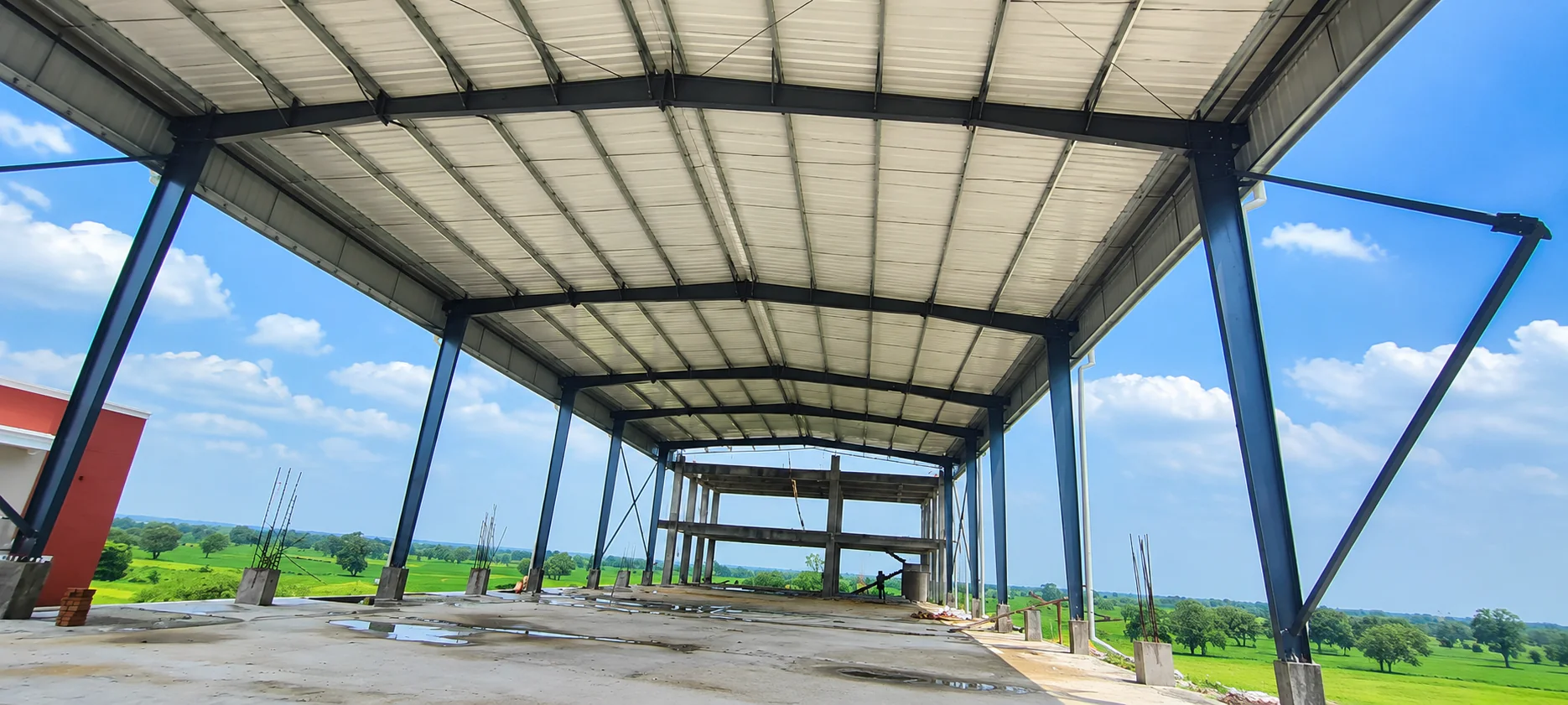
Standing Seam Roofing System Services In MP
Standing seam roofing systems are modern metal roofing solutions widely considered for industrial buildings, warehouses, factories, commercial structures and pre-engineered buildings. These systems feature raised vertical seams that connect adjacent metal roof panels and create a continuous roofing surface with concealed fixing arrangements.
Rajpoot PEB Creation offers PEB-related building solutions for businesses looking for standing seam roofing system requirements in Madhya Pradesh. These roofing systems can be considered for projects where roof appearance, weather protection, structural compatibility and thermal movement are important considerations.
Unlike conventional exposed-fastener roofing sheets, standing seam systems generally use concealed clips or specialised fastening arrangements to secure the panels to the supporting structure. Depending on the selected profile, adjacent panels are joined through snap-lock or mechanical seaming methods.
Whether you are planning a new industrial factory, warehouse, manufacturing facility or commercial building, selecting an appropriate standing seam roofing system can help meet the project's roofing and architectural requirements.
What Is A Standing Seam Roofing System?
A standing seam roofing system is a metal roofing arrangement in which adjacent roof panels are connected through raised vertical seams. The panels are attached to the supporting structure using concealed clips or compatible fixing systems.
The raised seams help manage water movement across the roof surface, while concealed fixing arrangements reduce exposed fastener penetrations across the main roof panel area.
A typical standing seam roofing system may include:
-
Metal roofing panels
-
Raised vertical seams
-
Concealed fixing clips
-
Sliding or fixed clips, as required
-
Supporting roof purlins
-
Ridge and eave flashings
-
Gutter and drainage arrangements
-
Roof insulation components
-
Fasteners and compatible accessories
-
End closures and weatherproofing details
The exact components depend on the selected roofing profile, building design and manufacturer's specifications.
Benefits Of Standing Seam Roofing Systems
1. Concealed Fastening: Concealed clips reduce the number of exposed fasteners across the main roof panel surface.
2. Weather Protection: Raised interlocking seams and appropriate flashing details help manage rainwater and improve roof weather resistance when correctly designed and installed.
3. Thermal Movement Accommodation: Suitable sliding clip systems allow metal panels to expand and contract with temperature changes.
4. Modern Appearance: Raised vertical seams provide a clean and organised architectural appearance.
5. Long Roof Panel Applications: Certain standing seam systems can accommodate long panel lengths, subject to transportation, installation and thermal movement requirements.
6. PEB Compatibility: Standing seam roofing can be coordinated with suitable PEB structures, purlins and supporting steel frameworks.
7. Insulation Compatibility: Suitable roofing assemblies can incorporate insulation and condensation-control arrangements according to building requirements.
Applications Of Standing Seam Roofing Systems
Standing seam roofing systems can be considered for various industrial, commercial and architectural applications:
-
Industrial factories and manufacturing units
-
PEB structures and industrial sheds
-
Large warehouses and storage facilities
-
Commercial buildings and office structures
-
Logistics and distribution centres
-
Engineering and fabrication workshops
-
Automobile manufacturing facilities
-
Agricultural and processing buildings
-
Large-span commercial structures
-
Institutional and architectural buildings
The appropriate roofing profile should be selected according to the building design, roof slope, weather conditions and project requirements.
Types Of Standing Seam Roofing Systems & Their Applications In MP
Different standing seam roofing profiles are available for industrial and commercial construction. Their selection depends on roof slope, panel material, structural support, installation requirements and the expected performance of the roofing system.
1. Snap-Lock Standing Seam Roofing
Snap-lock roofing systems use specially designed panel edges that connect by snapping together over compatible clips or supports.
Key Features:
-
Raised vertical seam profile
-
Concealed fastening arrangement
-
Interlocking panel edges
-
Suitable for compatible roof configurations
-
Installation without mechanical seaming in many system designs
The minimum roof slope and support requirements must be confirmed using the selected product's technical specifications.
2. Mechanical Lock Standing Seam Roofing
Mechanical lock systems use specialised tools or seaming machines to fold and lock adjacent panel edges together.
These systems may use single-lock or double-lock seam configurations depending on the selected profile.
Key Features:
-
Mechanically formed raised seams
-
Concealed clip arrangements
-
Different seam heights and profiles
-
Suitable for specified roof configurations
-
System-specific weatherproofing details
3. Single Lock Standing Seam Roofing
Single-lock systems involve one mechanical fold joining adjacent roofing panels. They are used in compatible roofing applications where the selected profile and design conditions permit this seam configuration.
Key Features:
-
Single-fold seam arrangement
-
Raised vertical joints
-
Concealed fixing options
-
Compatible with suitable metal panel profiles
4. Double Lock Standing Seam Roofing
Double-lock systems use an additional fold in the mechanical seam to create a more completely closed joint.
Key Features:
-
Double-folded seam arrangement
-
Mechanically joined panel edges
-
Suitable for selected roof designs
-
Product-specific installation requirements
-
Compatible clips and flashing details
5. Aluminium Standing Seam Roofing
Aluminium standing seam systems are used in selected industrial and architectural roofing applications. Aluminium's weight and corrosion characteristics can make it suitable for particular environments, subject to the correct alloy and coating specifications.
Key Features:
-
Lightweight roofing material
-
Raised seam configuration
-
Concealed fixing options
-
Thermal movement considerations
-
Architectural and industrial applications
6. Galvalume And Colour-Coated Standing Seam Roofing
Standing seam panels may be manufactured from suitable coated steel materials, including Galvalume and other specified coated steel products.
Key Features:
-
Metal panel roofing construction
-
Different coating and colour options
-
Raised seam profiles
-
Compatibility with suitable supporting systems
-
Material specifications based on environmental exposure
7. Long-Span Standing Seam Roofing
Long-span standing seam systems use extended metal roof panels to cover larger roof lengths with fewer transverse joints.
Key Features:
-
Long panel arrangements
-
Reduced transverse joint requirements
-
Concealed clip fixing systems
-
Thermal expansion and contraction provisions
-
Suitable for selected industrial and warehouse roofs
Panel length, transportation, installation and movement detailing must be considered during design.
8. Curved Standing Seam Roofing
Curved standing seam roofing is used in suitable architectural and industrial structures where a curved roof profile is required.
Applications:
-
Architectural commercial buildings
-
Industrial structures with curved roofs
-
Specialised warehouse designs
-
Large-span architectural projects
The selected panel system must be compatible with the required curvature and structural arrangement.
9. Insulated Standing Seam Roofing Systems
Insulated standing seam roofing arrangements are considered where thermal performance and condensation control are important.
Depending on the roof assembly, insulation options may include:
-
Rockwool insulation
-
Glasswool insulation
-
Suitable rigid insulation systems
-
Insulated metal panel arrangements
-
Vapour-control and condensation-control layers
The complete roofing assembly should be designed according to the building's internal conditions and external climate.
Important Factors For Selecting A Standing Seam Roofing System
Selecting the correct standing seam roofing system requires more than choosing a panel profile. Important considerations include:
-
Building length and width
-
Roof slope and drainage requirements
-
Panel material and thickness
-
Seam height and profile configuration
-
Fixed and sliding clip arrangements
-
Wind uplift and structural loading
-
Roof purlin spacing and supporting structure
-
Thermal expansion and contraction
-
Ridge, eave and perimeter flashing details
-
Insulation and condensation control
-
Roof penetrations and ventilation openings
-
Manufacturer's installation specifications
Standing Seam Roofing Installation Process
A typical standing seam roofing project may involve the following stages:
-
Roof Requirement Assessment: Reviewing building dimensions, roof slope, site conditions and intended building application.
-
Roof Structure Inspection: Checking the supporting steel framework, purlins and roof alignment.
-
Panel Selection: Selecting a compatible standing seam profile, material, thickness and coating.
-
Clip And Fastener Planning: Determining the appropriate fixed and sliding clip arrangement according to panel movement and design loads.
-
Roof Panel Installation: Positioning and fixing the panels according to the approved installation details.
-
Seam Locking: Connecting adjacent panels through the specified snap-lock or mechanical seaming process.
-
Flashing And Accessories: Installing ridge caps, eave details, gutters, closures and other compatible accessories.
-
Final Inspection: Checking seam closure, panel alignment, fasteners, flashing, drainage and weatherproofing details.
Why Choose Rajpoot PEB Creation For Standing Seam Roofing System Services In MP?
Choosing an appropriate standing seam roofing system requires coordination between roof panels, structural supports, fixing arrangements and weatherproofing details. Rajpoot PEB Creation offers PEB-related building solutions and welcomes enquiries for industrial roofing requirements across Madhya Pradesh.
1. Project-Specific Roofing Requirements
Every building has different roof dimensions, slope requirements and environmental conditions. The roofing arrangement should be selected according to the project's actual requirements.
2. PEB Roofing Compatibility
Standing seam roofing systems can be considered for suitable pre-engineered buildings, industrial sheds and steel structures. The panel clips and supporting arrangements should be coordinated with the structural framework.
3. Different Roofing Profile Options
Snap-lock, mechanical lock, single-lock and double-lock profiles can be evaluated according to the selected product and building requirements.
4. Material Selection Considerations
Aluminium, Galvalume and other suitable coated metal roofing materials can be considered based on project specifications and environmental exposure.
5. Insulation And Ventilation Coordination
Industrial roofing may require insulation, ventilation and condensation-control arrangements. These components should be planned as part of the complete roofing assembly.
6. Structural And Installation Coordination
Roof panels, clips, purlins, flashings and drainage details should be coordinated to support proper installation and roofing performance.
7. Enquiries Across Madhya Pradesh
Based in Rau, Indore, Rajpoot PEB Creation welcomes enquiries for PEB-related building and roofing solutions from different cities and industrial locations across Madhya Pradesh. Contact the company to discuss your project requirements and confirm the available service scope.
Standing Seam Roofing System Services In Major Cities & Locations Of Madhya Pradesh
Madhya Pradesh has several industrial, commercial and developing business locations where standing seam roofing systems can be considered for factories, warehouses, manufacturing facilities, PEB structures and commercial buildings.
Rajpoot PEB Creation welcomes enquiries for standing seam roofing and PEB-related building requirements from the following locations, subject to project scope and service availability.
Major Cities Of Madhya Pradesh
Madhya Pradesh, Bhopal, Indore, Jabalpur, Gwalior, Ujjain, Sagar, Dewas, Satna, Rewa, Ratlam, Katni, Singrauli, Burhanpur, Khandwa, Chhindwara, Morena, Bhind, Shivpuri, Vidisha, Guna, Mandsaur, Neemuch, Sehore, Hoshangabad (Narmadapuram), Betul, Itarsi, Harda, Damoh, Panna, Chhatarpur, Tikamgarh, Datia, Ashoknagar, Shajapur, Agar Malwa, Rajgarh, Dhar, Khargone, Barwani, Jhabua, Alirajpur, Balaghat, Mandla, Dindori, Seoni, Narsinghpur, Shahdol, Umaria, Anuppur, Sidhi, Maihar, Sheopur, Raisen.
Industrial And Commercial Locations
Mandideep, Bina, Gadarwara, Pipariya, Nagda, Jaora, Mhow (Dr. Ambedkar Nagar), Pithampur, Rau, Sanwer, Badnagar, Khachrod, Tarana, Berasia, Obedullaganj, Kolar, Budhni, Kannod, Khategaon, Barwaha, Sanawad, Maheshwar, Mandu, Omkareshwar, Dhamnod, Garoth, Suwasra, Jawad, Manasa, Multai, Parasia, Chourai, Waraseoni, Baihar, Lakhnadon, Wara Seoni, Dabra, Bhitarwar, Sabalgarh, Ambah, Porsa, Lahar, Gohad, Mehgaon, Karera, Pichhore, Kolaras, Badarwas, Jaithari, Kotma, Amla, Sarni, Bairagarh.
Location-Based Standing Seam Roofing Requirements
-
Indore, Rau, Pithampur and Dewas: Standing seam roofing for industrial sheds, factories, warehouses and PEB structures.
-
Bhopal and Mandideep: Metal roofing systems for commercial buildings, industrial facilities and steel structures.
-
Jabalpur, Katni and Sagar: Roofing solutions for warehouses, workshops and industrial buildings.
-
Gwalior, Morena and Bhind: Standing seam roofing for factories, storage facilities and commercial structures.
-
Ujjain, Nagda and Ratlam: Industrial metal roofing and PEB roof system requirements.
-
Rewa, Satna and Maihar: Roofing systems for processing units, warehouses and industrial sheds.
-
Dhar, Khargone and Barwani: Metal roofing solutions for industrial and commercial buildings.
-
Mhow, Sanwer and nearby areas: Standing seam roofing requirements for workshops, warehouses and industrial facilities.
Businesses planning a new metal roof or upgrading an existing industrial roofing system can contact Rajpoot PEB Creation to discuss their project requirements.
Frequently Asked Questions (FAQs)
Q1. What is a standing seam roofing system?
A standing seam roofing system is a metal roofing arrangement in which adjacent panels are joined through raised vertical seams. The panels are generally attached to the supporting structure using concealed clips or compatible fixing arrangements.
Q2. What are the advantages of standing seam roofing?
Standing seam roofing offers concealed fastening options, raised panel joints, modern appearance and the ability to accommodate thermal movement through suitable clip systems.
Q3. What is the difference between snap-lock and mechanical lock standing seam roofing?
Snap-lock panels connect through specially designed interlocking edges, while mechanical lock panels require their seams to be folded and secured using a specialised seaming tool.
Q4. What materials are used in standing seam roofing systems?
Common material options include aluminium, Galvalume and other suitable coated steel products. The appropriate material depends on the selected system and environmental conditions.
Q5. Is standing seam roofing suitable for PEB structures?
Yes. Standing seam roofing can be considered for compatible PEB structures. The roofing panels, clips, purlins and supporting framework must be coordinated according to the selected system's specifications.
Q6. Can standing seam roofing be used on low-slope roofs?
Certain standing seam systems are designed for low-slope applications, but the minimum permissible slope depends on the panel profile, seam configuration, sealant requirements and manufacturer's specifications.
Q7. Do standing seam roofing systems have exposed screws?
Most concealed-fix standing seam systems use hidden clips to attach the panels to the supporting structure. Some perimeter details and accessories may still require exposed fasteners according to the approved installation design.
Q8. Can standing seam roofing accommodate temperature changes?
Yes. Suitable floating systems use sliding clips to accommodate thermal expansion and contraction of metal panels. Correct fixed-point and movement detailing is important.
Q9. Can insulation be installed with standing seam roofing?
Yes. Compatible roofing assemblies can incorporate insulation and condensation-control layers according to the building's thermal and operational requirements.
Q10. Is standing seam roofing suitable for industrial warehouses?
It can be considered for suitable industrial warehouses, subject to roof slope, structural support, panel specifications, drainage and weather conditions.
Q11. What factors affect standing seam roofing costs?
Costs depend on panel material, thickness, profile, roof area, roof geometry, clip arrangement, insulation, flashing, accessories, transportation and installation requirements.
Q12. Does Rajpoot PEB Creation accept standing seam roofing enquiries across Madhya Pradesh?
Rajpoot PEB Creation welcomes enquiries from major cities and industrial locations across Madhya Pradesh. Contact the company to discuss your project requirements and confirm the available service scope.
Conclusion
Standing seam roofing systems provide a modern metal roofing option for suitable industrial, commercial and PEB buildings. Their concealed fastening arrangements, raised seams and compatible movement clips make them an important consideration for projects requiring coordinated metal roofing solutions.
Rajpoot PEB Creation welcomes enquiries for PEB-related building and standing seam roofing solutions across Madhya Pradesh. Whether you are planning a factory roof, industrial warehouse or customized steel building, contact the team to discuss your roofing requirements.